Foundations
What meditation is
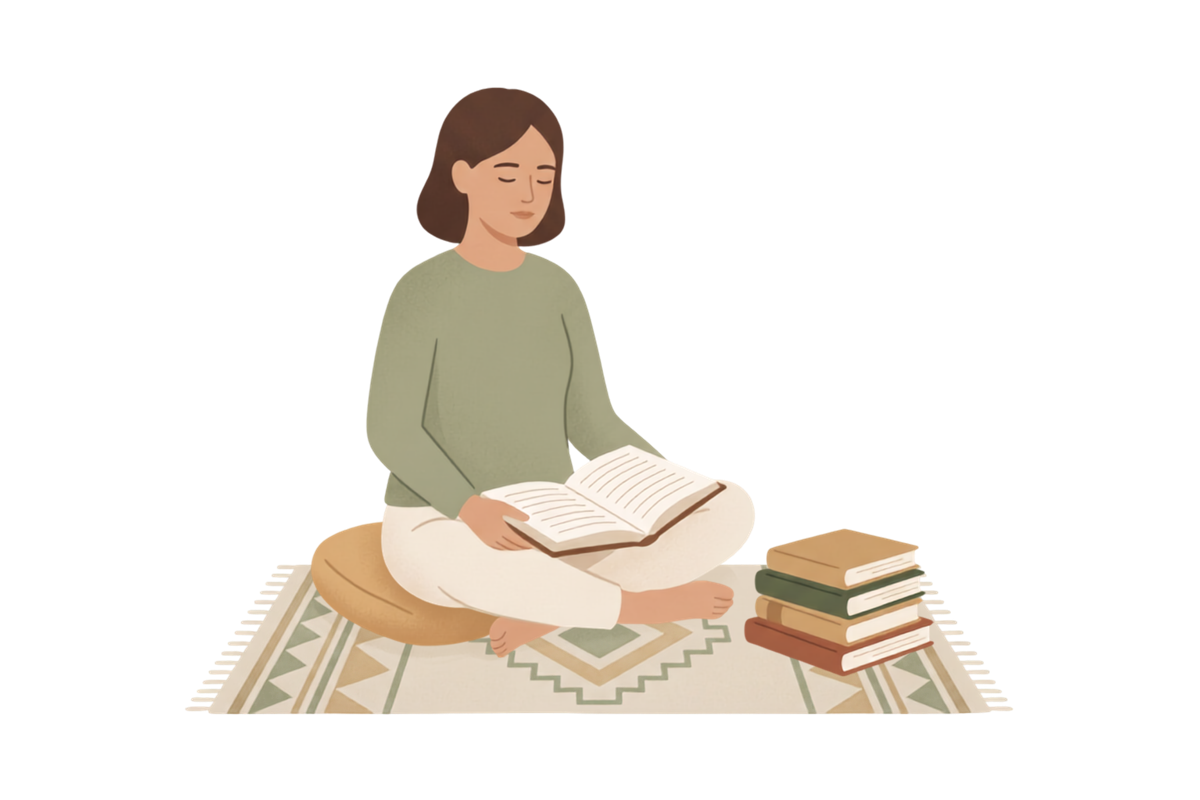
Meditation is, at its core, training for your mind. You learn to become more aware of your own thoughts and patterns. It also deepens your connection to yourself and to the world around you.
Over time, you become less reactive, more present, and more focused on what actually matters. You build the ability to stay calm even in stressful moments. Overall, you'll notice more joy, freedom and inner calm in your life.
What meditation isn't
Meditation doesn't have to be something spiritual that requires a lot of discipline or living in a monastery. You don't need a special cushion, perfect posture or a lot of time. And the most common misconception: your mind doesn't need to go completely quiet. Thoughts are allowed. They're part of the practice.
Two pitfalls to watch out for
Judging the practice.
We're used to judging everything, especially ourselves. Let that go while you meditate. No matter how many thoughts you had or how restless you felt: there's no such thing as a bad meditation.
Believing more is better.
A teacher of mine once told me I had to meditate at least 20 minutes a day. When I didn't manage that, I felt like I was failing, got frustrated, and eventually stopped altogether. What I know now, and what research confirms, is that even a few minutes a day is enough to feel the benefits.
Consistency matters more than duration.
Prepare your space
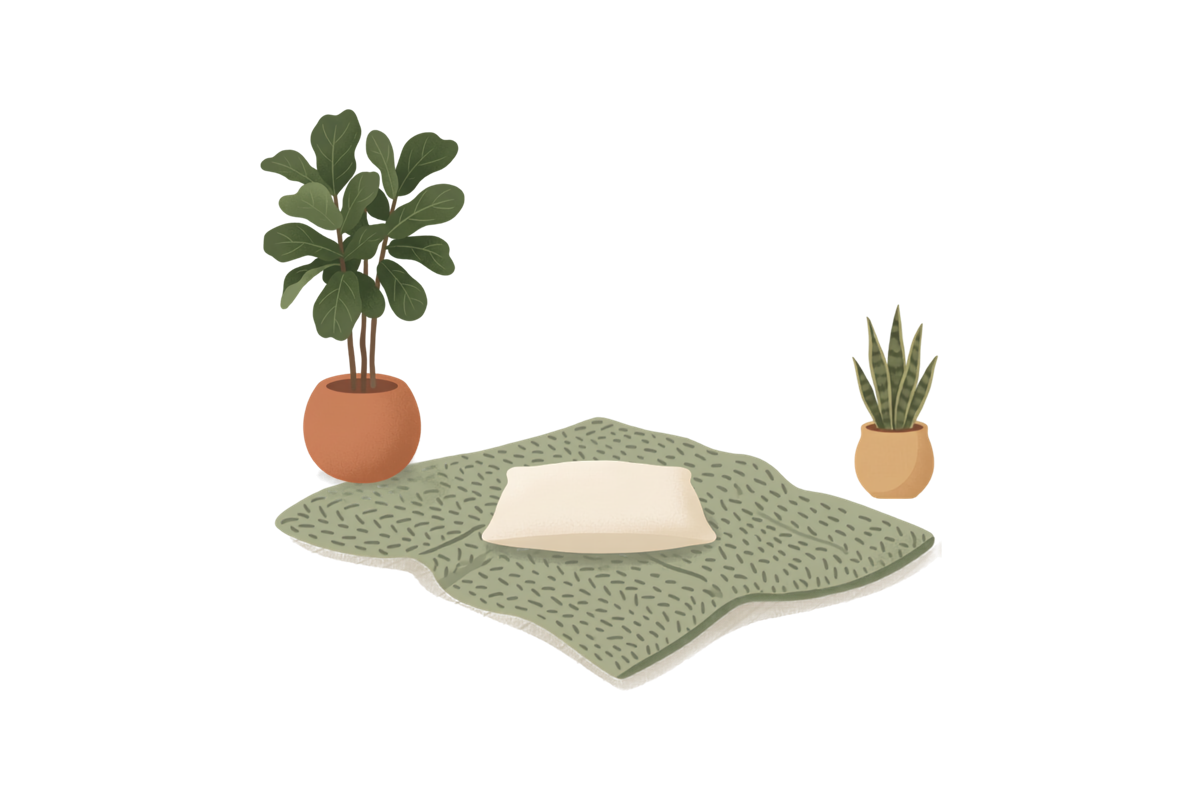
Create your meditation spot
Nothing fancy needed. A blanket and a cushion in a quiet corner of your home will do just fine.
Eliminate distractions
Make sure you're undisturbed for the time you meditate. Put your phone on “do not disturb”, and if you don't live alone, let the people around you know you'd like a few minutes uninterrupted. Or even better, invite them to join you.
Meditation
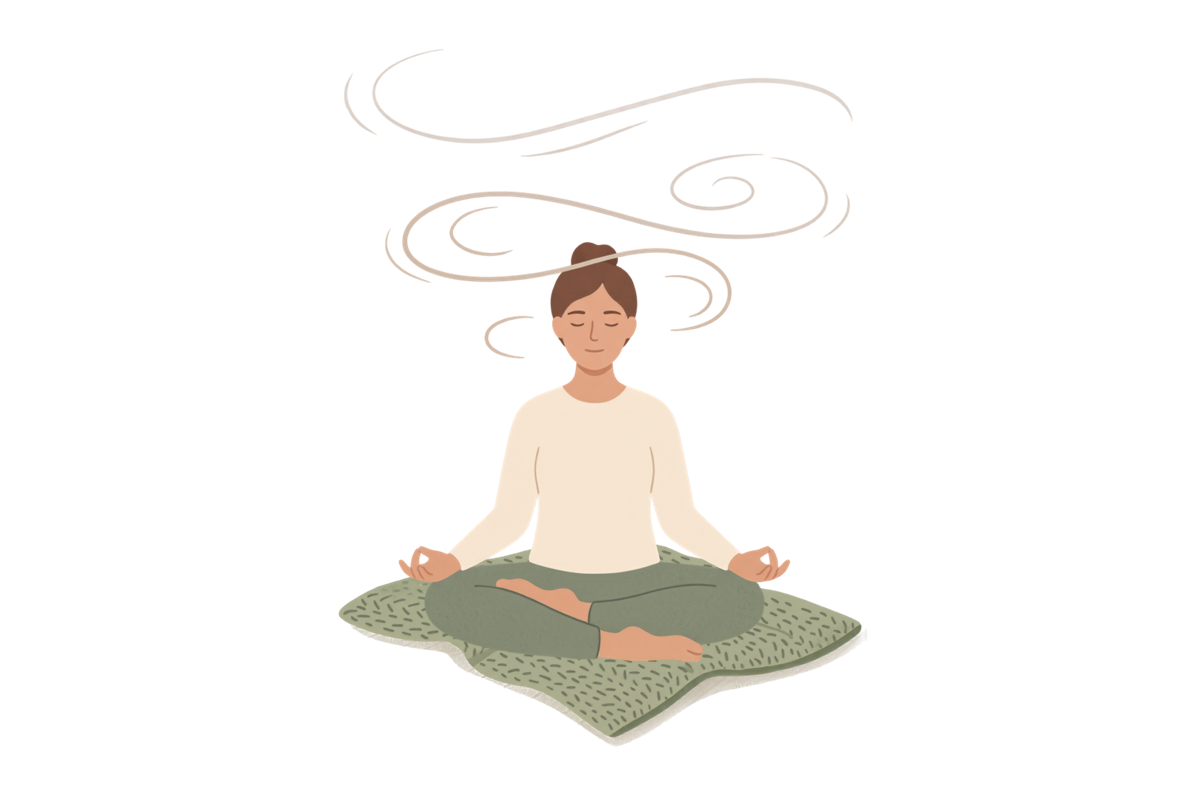
Now that you know what meditation is and how to prepare, let's get into the actual practice.
You can guide yourself through the structure below, or follow along with the recording I made for you.
Arrive
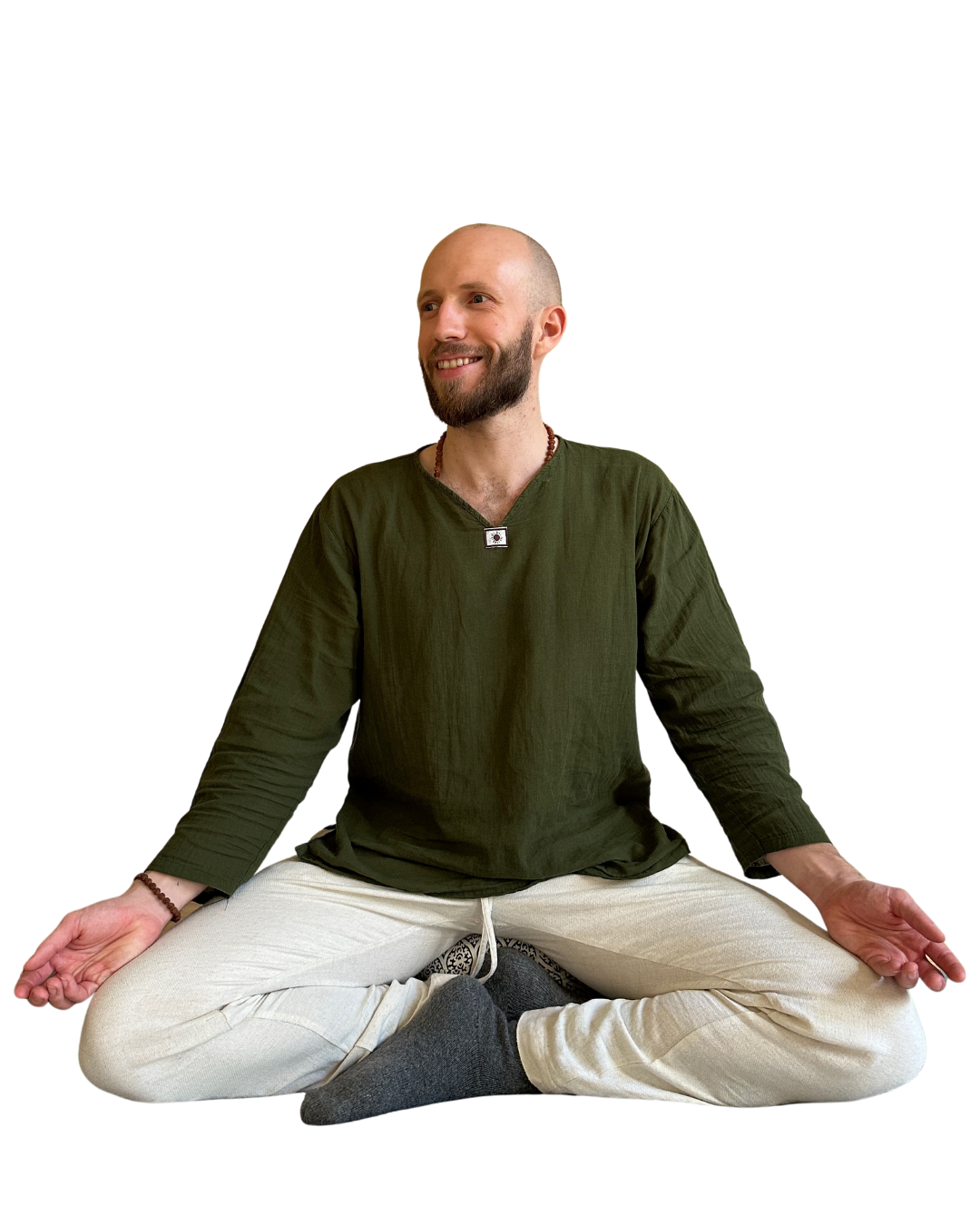
Sit upright, but relaxed. As you exhale, let your buttocks sink deeper into your cushion. As you inhale, lengthen your spine. Feel the contact between your body and the ground beneath you. Relax your body. With every exhale, consciously release a bit of tension – in your shoulders, your jaw, your forehead.
Breathe
Deepen your breath. Breathe deep into your belly (you can place a hand on your belly, it should rise as you inhale) and extend your exhale. Repeat this about 5 times.
Focused attention
Bring your attention to your breath: at your nostrils, your chest, or your belly. Choose whichever spot you notice your breath most clearly and stay there. Just observe how each breath happens completely on its own.
Notice wandering, gently return
Your mind will wander. That's not the exception, that's the norm. The moment you notice you drifted off, gently bring your attention back to your breath. Without judging yourself for it. Noticing your thoughts and returning your focus, again and again – that's the actual practice.
Stay with step 3 and 4 for about 3 to 10 minutes.
Reflect
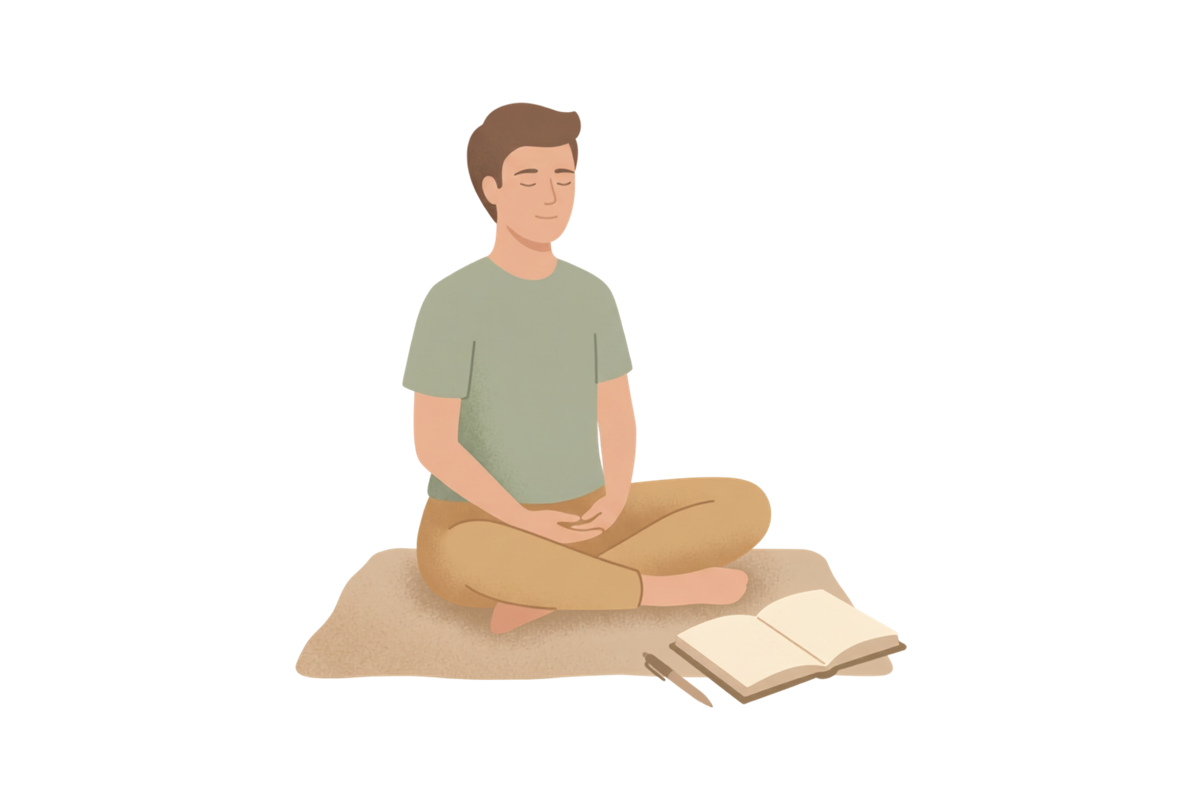
Let the meditation come to a gentle close. Bring your attention back to your body, slowly start to move again, and when you're ready, open your eyes. Notice how you feel now.
Take a moment to feel grateful that you gave yourself this time.
No matter how your meditation felt, full of thoughts or calm: it was good exactly as it was.
Build a routine
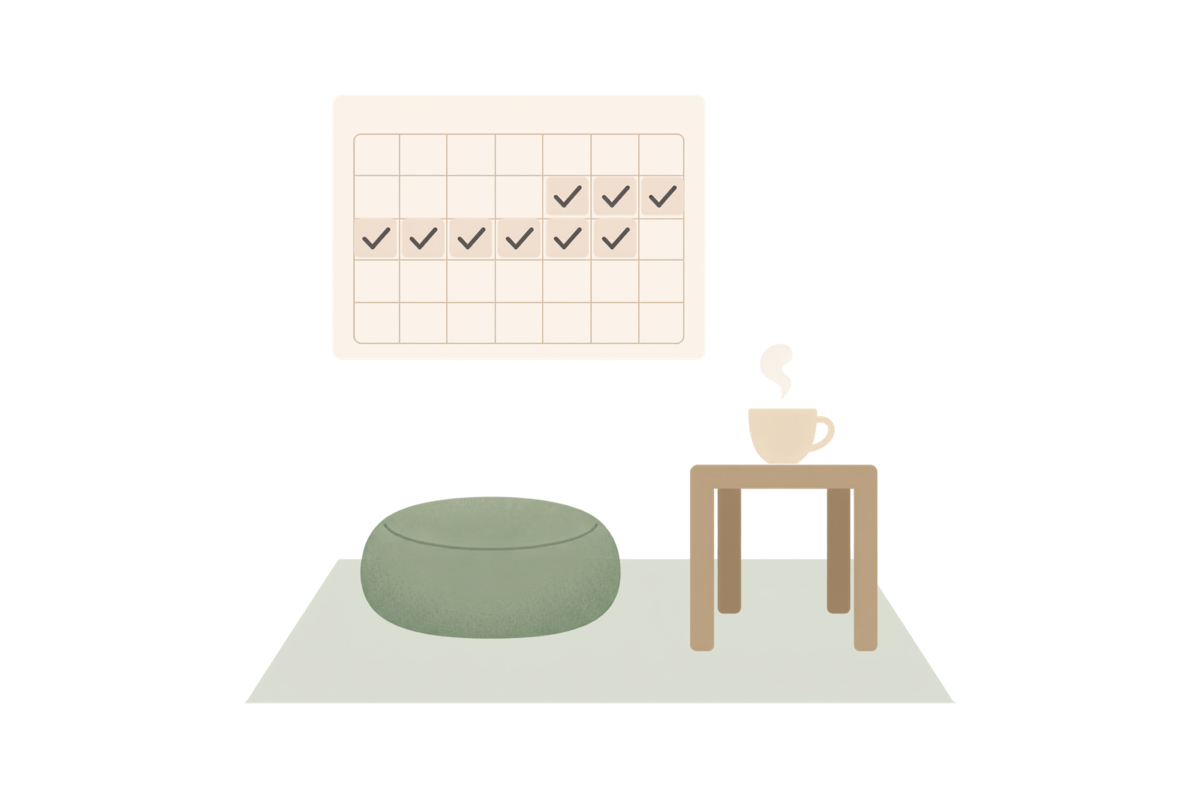
A single meditation can already feel good. But the real effects, the ones that actually change your everyday life, come from consistency.
The good news: building a routine is easier than you think, if you keep these 3 things in mind.
Pick a fixed time. Ideally the same time every day.
Attach it to something you already do. Right after you pour your morning coffee, for example.
Sit down as often as you can, even if it's just for one minute. Showing up matters more than the length of any single session.
And if you miss a day: no big deal. It happens to everyone. What matters is that you simply start again the next day.